Posted: March 23rd, 2017 | Author: Shauna | Filed under: Controlled Substances, Dental | Tags: Controlled Substances, DEA, Dental, Dental e-Prescribing, dental practice management, Dental Support Organization, DSO, e-Prescribing, e-Prescribing controlled substances, electronic prescribing, EPCS, Great Expressions Dental Centers, Opioid Epidemic, Opioids, Patient Engagement, PDMP, Prescription Drug Monitoring Program | No Comments »

To continue our round table blog series, we shed light from the technical side of dentistry’s role in the opioid epidemic. This time, we sat down with Jason Wolan, Director of EHR Implementation at Great Expressions Dental Centers.
How does your organization view the opioid epidemic as well as your dentists’ role in this crisis?
Great Expressions Dental Centers recognizes an opioid epidemic in this country driven largely by what has historically been a very lax approach to responsible prescribing. Today a lack of commitment by major stakeholders to take hard stances on better regulating the manufacturing and supply of these drugs continues to fuel the fire. In many cases, exploration of alternative pain management therapies and more rigid prescribing protocols that mitigate excess supply and drive more frequent doctor-patient interaction for those on long-term pain management therapies would likely result in major strides to not only reduce excess supply, but reduce unnecessary consumption as well. As a leading DSO and supplier of these medications, it is our job in the dental industry to lead by example and set progressive prescribing protocols that focus on responsible pain management therapies reinforced by firm controls and processes that deter abuse.
Are you having internal conversations about how your organization can curb the use of opioids or dispense trends?
Internally, our transition to an electronic prescribing platform has really been the catalyst for all of this primarily allowing us to gain insight into the prescribing habits of our providers. Prior to prescribing electronically, we relied heavily on spotty computerized provider order entry (CPOE) and “good faith” prescribing based on paper prescriptions being written with little or no audit trail. Today, we are phasing out paper prescribing with an ultimate goal of reporting on prescribing habits, particularly as they relate to opioid prescribing, allowing us better insight into drug-volume and drug-frequency combinations that may raise red flags.
How do you think e-Prescribing assists in efforts to curb opioid prescribing habits?
First and foremost, e-Prescribing, as is the case with most transitions to electronic mediums, will allow for better organizational oversight which will likely cause an industry shift as providers begin to recognize the results of increased transparency. Access to this aggregated data will create an unprecedented level of ad-hoc and scheduled reporting of prescribing habits with the ability to begin to profile behaviors and automatically intervene as necessary. In the past, while prescribing could be tracked, much of the data was burdensome and time consuming to compile, but as electronic prescribing platforms and the industry standards have become so available, the ease with which most organizations can monitor and proactively engage providers today should be a major driving force in deterring abusive prescribing. Reinforcing the latter will come with a societal transformation of less tolerance for prescriber supported prescription drug abuse and the increased media coverage, both at the state and federal level, prosecuting the offending prescribers.
Do you have access to data that you currently, or plan to, utilize in regards to proving how your practices are focused on responsibly prescribing these substances?
Great Expressions Dental Centers is currently generating weekly reports of prescribing focused on drug-volume/drug-frequency combinations. While the organization has not completely transitioned to electronic prescribing, we have significantly reduced access to paper prescribing and expect to see the true value of electronic prescribing when we are able to profile our organizational prescribing practices in its entirety.
Are there any policies in place, or may be in the future, regarding how many pills should be dispensed per controlled substance?
As a DSO, our clinical operations, policies, and procedures, and guidelines are all set by our Chief Clinical Officer. A consistent patient experience defined by responsible care coordination for all Great Expressions Dental Center’s patients is the cornerstone of the brand we have established. A large part of that includes driving responsible practicing techniques and ensuring that our patients’ interests are front and foremost, this of course includes responsible prescribing to mitigate the risks associated with opioid prescribing and has existed prior to our engagement with electronic prescribing. In the future, we hope to leverage the platform further in this regard.
To listen to the full round table, download your copy here.
Some responses have been slightly edited for clarity and length.
About DoseSpot
DoseSpot is a Surescripts certified e-Prescribing platform specifically designed to integrate with electronic health record, electronic dental record, practice management and telehealth software. DoseSpot is certified to e-Prescribe controlled substances and has provided simple, affordable and integratable e-Prescribing solutions to healthcare IT companies since 2009. For more information, please visit www.DoseSpot.com.
Posted: March 22nd, 2017 | Author: Shauna | Filed under: Controlled Substances, Dental | Tags: Controlled Substances, DEA, Dental, Dental Associates, Dental e-Prescribing, dental practice management, Dental Support Organization, DSO, e-Prescribing, e-Prescribing controlled substances, electronic prescribing, EPCS, Opioid Epidemic, Opioids, Patient Engagement, PDMP, Prescription Drug Monitoring Program | No Comments »

As the opioid epidemic continues to grow across the nation, DoseSpot recently sat down with Key Opinion Leaders from Dental Support Organizations (DSOs) to discuss how their organization is implementing best practices to decrease opioid overdose deaths and increase patient safety, as well as their viewpoint on what dentistry’s role is during this crisis.
For part I of our blog series, our focus is on the clinical element of dentistry’s role in the opioid epidemic with Dr. John Zweig, Chief Dental Officer of Dental Associates.
How does your organization view the opioid epidemic as well as your dentists’ role in this crisis?
Dental Associates is keenly aware of the problem with opioids and we take a very deliberate role in managing patients’ pain appropriately with the minimum required medication. Educating patients and matching pain relief management with the present dental problem is very important.
Do you provide your dentists education, training, or resources regarding controlled substances?
Continually, Dental Associates has educated its providers on appropriate pain control measures and the use of controlled drugs. The challenge remains with patients whom insist on strong medications and working with them to minimize the prescriptions and the type of drugs used. More patient education is required, and our use of patient prescription histories is becoming more widely used to discover how to explain the minimum amount of medication used.
Within your dental practices, how do you communicate the important relationship between dentists and controlled substances?
Within our provider education, orientation and our monitoring of prescriptions, we continue to provide feedback to minimize prescriptions for controlled drugs both in type and quantity of medication provided.
How do you think e-Prescribing assists in efforts to curb opioid prescribing habits?
It actually reduces fraud; it ensures that we are writing the prescriptions the way we want them to be and that they get to the right people. Electronic prescriptions allows us to monitor this because potentially we may have a provider who is unknowingly or unwittingly giving out large amounts of drugs and we can have a conversation with them, potentially educate them, or make them aware of the situation. This isn’t about a “gotcha game,” it’s about educating providers on best practices.
How do you handle/communicate with patients that may have a substance abuse issue?
Well, many times, first, we use the Wisconsin prescription drug monitoring program (PDMP). That has been in existence and the state has been encouraging us to use it. When using it, we find that many of the patients we’re concerned about are in pain management programs and so we refer them back to their pain managers to resolve their pain needs, so we’re not making it too complicated. For those not in a pain management program, we communicate the facts on their known prescriptions and advise them that we may be unable to prescribe more. We discover with that information, the push-back is minimal.
Anything else you think would be relevant in addressing dentistry’s role in curbing this epidemic?
The issue is a big problem, but I still think it requires education for patients and also the providers, because people have the expectation to reduce demand for pain medication. We need to educate the doctors on best practices with medications that are not controlled substances. We need to monitor and educate everyone.
Stay tuned for Part II: DSOs’ technical insight into dentistry’s role in the opioid epidemic.
To listen to the full round table, download your copy here.
Some responses have been slightly edited for clarity and length.
About DoseSpot
DoseSpot is a Surescripts certified e-Prescribing platform specifically designed to integrate with electronic health record, electronic dental record, practice management and telehealth software. DoseSpot is certified to e-Prescribe controlled substances and has provided simple, affordable and integratable e-Prescribing solutions to healthcare IT companies since 2009. For more information, please visit www.DoseSpot.com.
Posted: February 15th, 2017 | Author: DoseSpot | Filed under: Controlled Substances, In the News | Tags: Addiction Treatment, Alternative Treatments, Care Coordination, Chronic Pain, Chronic Pain Patients, Controlled Substances, e-Prescribing, e-Prescribing controlled substances, EPCS, MAT, Medication Assisted Treatment, Opioid Addiction, Opioid Crisis, Opioid Epidemic, State Mandates | No Comments »
It’s estimated that 100 million Americans struggle with chronic pain, yet most are facing a barrage of obstacles while seeking treatment in order to appropriately manage their pain. With the current opioid epidemic sweeping the nation, people want the number of opioid overdoses to fall, but patients don’t want to be made to suffer, and rightfully so.
Has the opioid crisis and its implications prevented legitimate chronic pain sufferers from receiving the treatment and associated services they require to productively function in life?
As of recently, more than half of prescribers across America are cutting back on opioid prescriptions, and nearly 1 in 10 have stopped prescribing them altogether. They’re ultimately struggling to find a balance about the merits of using opioids to treat pain, especially in the absence of effective and affordable alternatives.
With this reality, it appears that the chronic pain population is facing an uphill battle, especially with the justified fear of prescribers pulling back in such a chaotic way that could be harmful to patients. Opioid drugs affect the body in an extreme manner and are not something a patient should stop abruptly or without appropriate medical oversight. It needs to be a monitored process, especially for those who have been on long term treatment.
In fairness to the other component of the chronic pain equation, are those patients that truly suffer from opioid addiction. As noted in a recent Boston Globe article, physicians face myriad pressure as they struggle to treat addiction and chronic pain, two conditions in which most physicians receive little training and often intertwine with one another.
Addiction is a complex disease that requires multifaceted solutions and a team approach. No single physician can provide the breadth of treatment required, nor are the necessary payment mechanisms in place to facilitate the “entirety†approach to treating addiction. That and the lack of physician education in addiction further fuels the long battle chronic pain patients are currently experiencing. Without proper knowledge of the physician, is every chronic pain patient now being viewed as an addict? Is that a realistic prejudice they’re being faced with?
In many cases, physicians are walking away completely – they don’t even want to see patients in chronic pain, but others urge to partner with patients and stay with them to help find other options. Such alternatives include The Spaulding Program, a program aimed at developing and teaching coping mechanisms, strategies, and “tricks†to manage and get through the pain. Although the program experiences great success, it had to limit its operation 20 years ago due to insurers ceasing payment for their comprehensive form of care.
It’s hopeful that the concern over opioids will lead to improved care, by deepening the doctor-patient relationship and opening the door for conversation to talk about managing pain, thus pointing to the desperate need for alternative treatments. For now, what is a chronic pain sufferer to do?
Author: Mark H.
Sources:Â Health.com; The Hill; American Academy of Pain Medicine; Boston Globe; Kevin MD Blog; CBS Los Angeles
About DoseSpot
DoseSpot is a Surescripts certified e-Prescribing platform specifically designed to integrate with electronic health record, electronic dental record, practice management and telehealth software. DoseSpot is certified to e-Prescribe controlled substances and has provided simple, affordable and integratable e-Prescribing solutions to healthcare IT companies since 2009. For more information, please visit www.DoseSpot.com.
Posted: February 8th, 2017 | Author: DoseSpot | Filed under: Basics, Controlled Substances, Public Policy | Tags: Controlled Substances, Government Opioid Road Map, Government Road Map, Maine e-Prescribing Law, Maine e-Prescribing Legislation, Maine e-Prescribing Mandate, Maine Mandate, Mandatory e-Prescribing, Mandatory Electronic Prescribing, National Governors Association, NGA, Opioid Abuse, Opioid Crisis, Opioid Epidemic, Opioid Overdose, Opioid Road Map, Opioids, PDMP, PDMP State Mandate, PMP, Prescription Drug Monitoring Program, Prescription Monitoring Program, Prescription Opioids, Schedule II Medications, State Mandate | No Comments »

The opioid crisis has taken our nation by storm, claiming an average of 78 victims a day, all of whom lost a vicious battle with opioid addiction. According to the National Governors Association, the current epidemic is being fueled by inappropriate opioid prescribing, as 4 out of 5 heroin users reported misusing prescription opioids before switching to heroin. Now, governors across the United States are taking action against the epidemic with a range of public health and safety strategies that address everything from prevention to treatment to recovery. In order to successfully attack the opioid crisis head on, they’ve decided to create an Opioid Road Map which will act as a tool to outline these strategies for states nationwide.
A Road Map Was Born
The Road Map was developed by the National Governors Association (NGA) to help states respond to the growing crisis of opioid abuse and overdose, as well as strengthen law enforcement efforts and abilities to address illegal activity. The individual state can either follow the road map step-by-step or they can pick and choose which pieces to utilize based on their needs.
The Opioid Road Map is a three-part process as outlined by the NGA:

Step 1 – Assess the Situation
Step 2 – Develop and Select Policies
Step 3 – Finalize Policies, Implement, and Evaluate Results
To develop the Road Map, the NGA worked with 13 states between 2012 and 2015 to create effective statewide programs to battle the opioid epidemic. Input was received from multiple stakeholders including pain specialists, law enforcement officials, health care payers, substance use disorder treatment professionals, and more. Numerous resources were shared in order to build this Road Map and having the ability to optimize and utilize the data collected from state Prescription Drug Monitoring Programs (PDMPs) was key to the Road Map’s creation.
The Role of PDMPs
The PDMPs of individual states is a database that contains controlled substance prescribing and dispensing data submitted by pharmacies and prescribers. This information is used to monitor and analyze all prescribing activity for use in abuse prevention, research and law enforcement. In regards to the Opioid Road Map specifically, the NGA is encouraging states to use their PDMPs as a tool for prescribers to gather real-time information on prescription opioids, and to analyze trends and outcomes associated with policies and programs.
According to the NGA, in order to maximize the use and effectiveness of state PDMPs, the following should be required:
- Prescribers should be querying PDMPs before prescribing Schedule II, III, IV controlled substances
- Pharmacists must report to the state’s PDMP within 24 hours of dispensing
- PDMP data must be used to provide proactive analyses and reporting to professional licensing boards and law enforcement
- PDMPs must be easy to use and PDMP data should be integrated into the Electronic Health Record (EHR)
- PDMPs should be interoperable with other states
Since these Prescription Drug Monitoring Programs already exist within forty nine states, it would be beneficial to utilize this data not only for preventing occurrences such as “doctor shopping†(people seeking multiple pain prescriptions from multiple prescribers) and identifying at risk patients, but also for achieving goals put forth by the Road Map in relation to research, law enforcement, and policy reform.
Road Map Expectations
By utilizing the Road Map, states will find background information on the current issue of opioid abuse and which factors are involved with prescription opioid misuse and addiction. They will also have access to the different steps outlined which act as a how-to guide for assessing the situation, selecting policies, and evaluating initiatives. Another item of value they could get from using the road map is a summary of evidence-based health care and public safety strategies to reduce opioid abuse.
By utilizing the Road Map, states will be able to work together to not only brainstorm about how to prevent and respond to the opioid epidemic, but more importantly, they will be able to put a plan into action which will achieve those defined objectives, with the ultimate goal of saving more lives in the process.
Author: Shannon K.
Sources: National Governors Association; NGA Road Map Outline; GCN Magazine
About DoseSpot
DoseSpot is a Surescripts certified e-Prescribing platform specifically designed to integrate with electronic health record, electronic dental record, practice management and telehealth software. DoseSpot is certified to e-Prescribe controlled substances and has provided simple, affordable and integratable e-Prescribing solutions to healthcare IT companies since 2009. For more information, please visit www.DoseSpot.com.
Posted: February 8th, 2017 | Author: DoseSpot | Filed under: Basics, Controlled Substances, Public Policy | Tags: Addiction, Addiction Treatment, American Medical Association, CDC, Controlled Substances, DEA, Drug Diversion, e-Prescribing controlled substances, e-Prescribing State Law, EPCS, Maine State Mandate, Mandatory e-Prescribing, Mandatory Electronic Prescribing, PDMP, PDMP State Law, PDMPs, PMP, PMPs, Prescription Drug Abuse, Prescription Drug Diversion, Prescription Drug Monitoring Program, Prescription Drug Monitoring Programs, Prescription Monitoring Program, Prescription Monitoring Programs, State Law, State Mandate | No Comments »

Prescription Drug Monitoring Programs (PDMPs) are state-run electronic databases that are used to track the prescribing and dispensing of controlled prescription drugs with the intent of helping to detect suspected abuse or diversion. These electronic databases provide important information regarding a patient’s controlled substance history that can be accessed by authorized individuals or agencies including law enforcement, medical examiners, addiction treatment programs, public and private payers, pharmacies, healthcare providers, and more.
All states except Missouri, the District of Columbia, and Guam have enacted PDMP legislation that mandate healthcare providers to record, consult and monitor prescribing data. Since the widespread implementation of PDMPs and corresponding legislations, there have been stories and statistics that seem to indicate success, however, there has also been feedback that indicates some major troubles with these databases and their use.
With PDMPs being utilized all over the country, should we expect a major turn-around in the prescription opioid crisis that is sweeping the nation? Are these databases in fact doing the job that they are intended to do? Or, are there major issues that are preventing their success? Let’s explore together.
The Benefits of PDMPs
PDMPs are considered to be the most promising state-level interventions to improve opioid prescribing, inform clinical practice, and protect patients at risk. They are intended to not only medically benefit patient care, but also to serve as a tool for law enforcement and other agencies concerned with opioid-related threats to the public health. This is because the information entered in to a PDMP can help prescribers and pharmacists identify patients at high-risk who would benefit from early interventions.
Further evaluations of PDMPs have demonstrated changes in prescribing behaviors, the use of multiple providers by patients, and decreased substance abuse treatment admissions. From a public health standpoint, PDMPs can be used by state health departments to better understand the current opioid addiction epidemic to better create new intervention methods.
As an example, in 2010, Florida established a PDMP and prevented health care providers from dispensing prescription opioid pain relievers directly from their office. That same year, there was a 50% decrease in oxycodone overdose deaths in the state. This change is thought to represent the first documented, substantial decline in drug overdose mortality in any state during the previous ten years.
Likewise, in 2012, prescribers in New York and Tennessee were required to check the state’s PDMP before prescribing opioids and the following year, New York saw a 75% drop in patients “doctor shopping†and Tennessee saw a 36% drop.
The Unfortunate Reality of PDMPs
Although PDMPs have significant potential to improve public health and patient outcomes, they do have the following shortcomings:
1. Under-Utilization
The inconsistent use, or under-utilization, of PDMPs is considered to be the biggest issue plaguing the database, as a PDMP is most useful when queried before prescribing and most maximized where usage is state mandated. A recent survey found that with physicians prescribing in a state without a PDMP mandate, only 22% were aware of their state’s PDMP, and only 53% had actually used it. These facts clearly indicate that state legislation is a critical success factor for the effectiveness of PDMPs to save patient lives.
2. Lack of Accessibility
Another issue with PDMPs is the ease of use and access, or lack thereof. States vary widely in which user categories are permitted to request and receive prescription history reports and under what conditions. Research suggests that usage may improve if states were to allow providers to appoint non-prescribing staff members to access the database on their behalf.
Furthermore, not all PDMPs share information across state lines. This can lead to important information being missed and can allow at-risk patients to receive more prescriptions for controlled substances than intended. However, more states are realizing the importance of sharing data across state lines and have recently become a part of PMP InterConnect.
3. Varying Times of Information Entry
Another matter of concern with PDMPs is varying times of information entry. When a controlled substance is dispensed to a patient, the prescription and patient information is entered by the pharmacy to the state PDMP. However, this information is entered at varying intervals – hourly, daily, or even monthly. If there is a long interval between dispense and submission times into the state PDMP, users will not have the most up-to-date information on a patient’s most recent prescriptions, thereby eliminating the maximum benefit of a PDMP. Currently, Oklahoma is the only state that collects data in real time, whereas, most states allow up to a week or longer for data submission.
4. Patient Adoption
Many prescribers attribute their worry about a patient’s reaction when checking the PDMP as a major disadvantage. In a recent survey, providers reported a variety of issues that arose when they reviewed the PDMP:
- 88% of patients reacted with anger or denial when questioned
- 73% of clinicians said that those angered patients sometimes did not return
- 22% of clinicians reported that the confronted patients had never asked for help with drug addiction or dependence problems
These clinicians also indicated that the unveiling of this information was not only upsetting to patients, and damaging to practitioner-patient relationships, but was also found to be inaccurate at times.
Additional concerns include added costs of more frequent office visits if prescribers become more cautious about writing prescriptions with refills, feelings of embarrassment when questioned about substance abuse, and patients turning to the illicit drug market if they are refused a controlled substance prescription.
Although the American Medical Association and American Society of Addiction Medicine stress the need to treat PDMP data just as well, if not better, than any other medical record, patients are becoming more vocal in their discomfort with PDMPs, claiming they make them feel that a medical consultation is no longer private.
5. Reluctant Prescribers
Like their patients, prescribers also show growing concern that they will be judged based on PDMP data. While most prescribers are assumed to support interventions to prevent fraudulent prescribing, high profile criminal prosecutions of prescribing large amounts of opioids can make prescribers reluctant to prescribe controlled substances in general for fear of legal retribution, also known as the “chilling effectâ€.
There is also greater perceived legal risk for prescribing or dispensing too much pain medication than for prescribing or dispensing too little pain medication. Because many practicing physicians have little if any formal training that would enable them to identify drug diversion, there is fear that PDMPs may wrongfully suspect and categorize some conscientious and caring physicians as fraudulent prescribers when they are actually prescribing in good faith, but lack training.
What Does This All Mean?
In this era of information technology, PDMPs are likely here to stay. While there are the aforementioned pitfalls of PDMPs, it is important to remember that there are still benefits to PDMPs in the public health sector, law enforcement, and of course, healthcare systems. What may be most helpful is to realize what changes could be made to make the PDMP process an ideal one.
From the standpoint of many prescribers, an ideal PDMP would:
- Alert its users to signs of illegal drug use
- Be easy to access
- Provide real time updates
- Be mandatory
- Have interstates accessibility
Perhaps over time if these changes were to be made, we would see more consistent use of PDMPs, especially as a tool to help overcome the opioid epidemic. A clear standard of practice against which providers’ care would be judged could also further advance the utilization of PDMPs in each state. Lastly, adequate training on addiction and pain management, along with a careful review of who should access a PDMP, could also attribute to better utilization and help accelerate the acceptance of each states’ prescription drug monitoring programs.
Author: Lindsey W.
Sources: Centers for Disease Control and Prevention; Lynn Webster MD; PDMP Assist;Â Wolters Kluwer; Shatterproof; National Center for Biotechnology Information
About DoseSpot
DoseSpot is a Surescripts certified e-Prescribing platform specifically designed to integrate with electronic health record, electronic dental record, practice management and telehealth software. DoseSpot is certified to e-Prescribe controlled substances and has provided simple, affordable and integratable e-Prescribing solutions to healthcare IT companies since 2009. For more information, please visit www.DoseSpot.com.
Posted: January 26th, 2017 | Author: Jodi | Filed under: Basics, Controlled Substances, Dental, Digital Health, Medical, Telehealth | Tags: Drummond Group, e-Prescribing, e-Prescribing Basics, e-Prescribing Integration, e-Prescribing Software, e-Prescribing Vendor, EHR, EMR, End Users, Health Care IT, Health Care Software, health IT, healthcare IT, Healthcare Software, Practice Management Software, surescripts, White Labeled Solution | No Comments »

As we discussed in our previous post, e-Prescribing is the electronic transmission of a prescription from the prescriber’s device to the patient’s pharmacy of choice, therefore replacing the traditional paper prescription.
How does e-Prescribing work for end users?
While e-Prescribing software comes in many shapes and sizes, e-Prescribing integration is directly integrated into healthcare software such as an Electronic Health Record / Electronic Medical Record, telehealth application, or dental practice management solution. By way of integrating e-Prescribing into a healthcare software, the e-Prescribing platform becomes an integral component of a healthcare software’s product offering.
e-Prescribing integration seamlessly allows a prescriber to log into their existing healthcare software, select a patient, then search for, enter and send an e-Prescription for the patient in a few short steps. The process saves the prescriber time while improving patient outcomes.
What are the benefits of a custom, white labeled solution?
When an e-Prescribing solution is “white labeledâ€, this means the e-Prescribing user interface mirrors the look and feel of the healthcare software in which the e-Prescribing solution has been embedded. Colors, fonts, font sizes, layout – you name it – can all be completely customized to provide a seamless experience for end users.
Furthermore, mobile optimization has become a major trend as more healthcare software solutions are operating in the cloud and prescribers are accessing applications from multiple devices and multiple locations. This is why it’s important that the e-Prescribing functionality performs well in different environments, but most importantly, on smaller screens.
Responsive design is critical in ensuring that any e-Prescribing solution is accessible on every device. It’s the best one size fits all solution as this type of design allows the webpage to expand and contract in order to perfectly fit within any screen in both the traditional office and mobile settings. Ultimately, responsive design cuts down on development time as the e-Prescribing user interface does not need to be adjusted manually for each type of device (i.e. mobile, tablet, laptop, or desktop).
What does it take to cross the finish line and go live?
To go live with e-Prescribing and be able to send prescriptions electronically, all healthcare software companies must go through a Surescriptsâ„¢ e-Prescribing integration review. Surescripts operates the largest health information network that connects the diverse and expansive community of care partners nationwide, including pharmacies, providers, benefit managers, and health information exchanges.
As part of this e-Prescribing integration review, healthcare software companies will have to successfully execute various test scenarios during a web meeting with Surescripts. Test scenarios will be provided for the following services:
- NewRx: Route new prescriptions to the patient’s pharmacy of choice
- Refills: Receive prescription renewal requests and submit responses between doctor and pharmacy
- Medication History: View aggregated medication history data from pharmacies and pharmacy benefit managers (PBMs) upon receipt of patient consent.
- Prescription Benefit: Surescripts’ Prescription Benefit service puts eligibility, benefits and formulary information at a prescriber’s fingertips at the time of prescribing. This enables prescribers to select medications that are on formulary and are covered by the patient’s drug benefit.
- Electronic Prescribing of Controlled Substances (EPCS): Product has achieved Surescripts EPCS certification and has provided third-party audit documentation as required by the DEA.
Upon completion, healthcare software companies will be listed on the Surescripts website.
Healthcare software companies also looking for the ability to Electronically Prescribe Controlled Substances (EPCS) will need to go through a similar testing process with an approved e-Prescribing of Controlled Substances auditor such as the Drummond Group Inc., one of the first DEA approved certification bodies for EPCS.
Learn about DoseSpot’s e-Prescribing integration process by downloading our latest Integration Tool Kit.
Don’t miss the other parts of our e-Prescribing 101 series:
e-Prescribing 101, Part I: The Basics
e-Prescribing 101, Part II: Controlled Substances
About DoseSpot
DoseSpot is a Surescripts certified e-Prescribing platform specifically designed to integrate with electronic health record, electronic dental record, practice management and telehealth software. DoseSpot is certified to e-Prescribe controlled substances and has provided simple, affordable and integratable e-Prescribing solutions to healthcare IT companies since 2009. For more information, please visit www.DoseSpot.com.
Posted: January 26th, 2017 | Author: Shauna | Filed under: Basics, Controlled Substances, Dental, Digital Health, Medical, Telehealth | Tags: Addiction, Controlled Substances, e-Prescribing, e-Prescribing controlled substances, e-Prescribing Integration, e-Prescribing Software, e-Prescribing Vendor, EHR, EMR, EPCS, Health Care Software, Medication Schedules, Opioid Epidemic, Opioids, Practice Management Software, Scheduled Drugs | No Comments »

To continue our e-Prescribing 101 blog series, we shine light on controlled substances. What they are, their relationship to e-Prescribing, as well as the correlation between prescription drugs and the current opioid epidemic.
What is a controlled substance?
A controlled substance is a drug or chemical, such as illicitly used drugs or prescription medications, that is regulated by a government based on the drug or chemical’s manufacture, possession, or use.
Why are certain drugs categorized as a controlled substance?
A drug is typically classified as “controlled” due to the potential detrimental effects on a person’s health and well-being. As a result, state and federal governments have seen fit to regulate such substances.
It’s for this reason that drugs, substances, and certain chemicals used to make drugs of this caliber are classified into five categories. The drug segregation is dependent upon the drug’s acceptable medical use and the drug’s abuse or dependency potential.
What are the medication schedules for controlled substances?
Schedule I
- Drugs with no currently accepted medical use and hold a high potential for abuse.
- Examples: Heroin, Marijuana (Cannabis), LSD, and Ecstasy
Schedule II
- Includes drugs that are accepted for medical use, but have a high potential for abuse, with use potentially leading to severe psychological or physical dependence.
- Examples: Vicodin, OxyContin, Adderall, and Ritalin
Schedule III
- Drugs with a moderate to low potential for physical and psychological dependence, with less abuse potential than Schedule I or Schedule II drugs.
- Examples: anabolic steroids, testosterone, and Tylenol with codeine
Schedule IV
- Drugs within this category have a low potential for abuse and dependence.
- Examples: benzodiazepines (Xanax, Valium, Ativan), Tramadol, and Ambien
Schedule V
- The lowest schedule for controlled substances, these drugs have lower potential for abuse and consist of preparations containing limited quantities of certain narcotics.
- Examples: Robitussin AC, Lyrica, and Motofen
What is EPCS?
EPCS stands for the Electronic Prescribing of Controlled Substances and is a technology that has been put into place to help address the rising issue of prescription drug abuse in the United States.
Understanding two-factor authentication
This two-step process is part of EPCS and ensures that only an authorized prescriber can electronically sign and send controlled substance prescriptions to a pharmacy, thus increasing patient safety. The process includes the entry of something you have, such as a token generated one-time code, and something you know, like a password. There are various options for two-factor authentication including: fob tokens, mobile phone applications, smart cards, USB thumb drives, and fingerprint scanners.
What is an opioid?
Opioids are substances that act on the body’s opioid receptors to produce euphoric effects, better known as a “high”, and are most often used medically to treat moderate to severe pain that may not respond well to other pain medications.
Why are opioids so addictive?
Opioid drugs work by binding opioid receptors in the brain, spinal cord, and other areas of the body to reduce the sending of pain messages to the brain, thus simultaneously reducing the physical feelings of said pain. They create artificial endorphins, the body’s natural painkillers, which tap into the “reward” sector of someone’s brain. However, with chronic use, opioids eventually trick the brain into stopping the production of these endorphins naturally. In doing so, the tolerance level increases and a patient is left with taking more medication to achieve the same effect.
They are most dangerous when taken in certain ways to increase the “high”, such as crushing pills and then snorting or injecting the powder, or combining the pills with alcohol or drugs, especially benzodiazepines. While some patients do take them for their intended purpose, they can still risk dangerous adverse reactions by not taking them exactly as prescribed, i.e. they take more at one time, or combine them with other medications not checked by their doctor.
Unfortunately, the fear of the intense withdrawal symptoms is often the biggest culprit when it comes to patients remaining addicted and ultimately leads them to continue taking the medication even if they no longer want to.
The correlation between prescription opioids and the opioid epidemic
In 2012 alone, 259 million prescriptions were written for opioids, which is more than enough to give every American adult their own bottle of pills. In comparison to ten, even five years ago, this number is dramatically increasing as time goes on and more and more opioid overdoses are being reported on a daily basis.
Physicians and dentists are collectively responsible for providing 81.6% of opioid prescriptions in the United States and because of this, they have a very unique role in mitigating the impact of this opioid epidemic. Opioid addiction often starts at the hands of healthcare professionals simply trying to do their job, prescribing pain medications to relieve their patients of painful woes, especially during post-operative recovery.
While many prescriptions are meant for initial, short-term treatment, some doctors and dentists authorize refills time and time again because they want to help patients whom claim that they are still in pain. However, when the pill bottle and refills run out, patients are left seeking alternatives to create that euphoric escape they’ve become so accustomed to. This could mean an endless search of several different doctors to prescribe more substances (also known as doctor shopping), purchasing pills on the black market, or worse, turning to heroin as a cheaper and more readily available alternative.
Furthermore, the associated stigma often deters patients from receiving proper rehabilitation treatment and even if they do seek treatment, the government currently limits the number of patients a single provider may treat with drugs such as buprenorphine or methadone, which are both proven to reduce cravings and save lives. This leads to many patients relapsing.
How does e-Prescribing help?
- e-Prescribing diminishes the possibilities of duplicate or lost prescriptions since the prescription is sent directly to the patient’s pharmacy.
- A patient will no longer have a paper prescription where the dispense quantity can be altered.
- Prescriber’s will have access to a patient’s medication history, therefore they can determine if a patient is doctor shopping or has a history of substance abuse.
Don’t miss the other parts of our e-Prescribing 101 series:
e-Prescribing 101, Part I:Â The Basics
e-Prescribing 101, Part III: End Users
Sources: DEA; DrugAbuse.gov; FDA
About DoseSpot
DoseSpot is a Surescripts certified e-Prescribing platform specifically designed to integrate with electronic health record, electronic dental record, practice management and telehealth software. DoseSpot is certified to e-Prescribe controlled substances and has provided simple, affordable and integratable e-Prescribing solutions to healthcare IT companies since 2009. For more information, please visit www.DoseSpot.com.
Posted: January 26th, 2017 | Author: Shauna | Filed under: Basics, Controlled Substances, Dental, Digital Health, Medical, Telehealth | Tags: e-Prescribing, e-Prescribing 101, e-Prescribing Basics, e-Prescribing controlled substances, e-Prescribing Integration, e-Prescribing Integration Platforms, e-Prescribing Software, EHR, Electronic Health Record, Electronic Medical Record, EMR, EPCS, Health Care Software, Health Care Software Companies, Practice Management Software, surescripts | No Comments »

Another year has come and gone. Time to start fresh, gain new perspective, and bring it back to basics. e-Prescribing basics, that is.
During our reflection on 2016, the DoseSpot realized that there’s so much information out there regarding e-Prescribing and its different components; so many key opinion leaders and incredible resources to tap into to help educate the world about e-Prescribing. However, how could we make it easier? How can we assist those who just want to learn more about e-Prescribing in general without the endless Google searches?
That’s why we decided to create a three-part blog series covering all e-Prescribing basics; a one-stop-shop to answer all of your e-Prescribing questions and curiosities.
We can promise you this – this is one New Year’s resolution we won’t give up on.
Let’s get started.
What is e-Prescribing?
The term e-Prescribing has become a popular buzzword in the healthcare industry, but what exactly does it mean? To put it simply, electronic prescribing, known in short as e-Prescribing, is a method of prescription transaction that allows prescribers to write and send prescriptions to pharmacies electronically instead of writing, phoning-in, or faxing. It ultimately replaces the costly paper prescription pad and tamper-proof printing paper from a prescriber’s office for good.
e-Prescribing solutions have the following capabilities:
- NewRx: Route new prescriptions to the patient’s pharmacy of choice.
- Refills: Receive prescription renewal requests and submit responses between doctor and pharmacy.
- Medication History: View aggregated medication history data from pharmacies and pharmacy benefit managers (PBMs) upon receipt of patient consent.
- Prescription Benefit: Surescripts’ Prescription Benefit service puts eligibility, benefits and formulary information at a prescriber’s fingertips at the time of prescribing. This enables prescribers to select medications that are on formulary and are covered by the patient’s drug benefit.
- Electronic Prescribing of Controlled Substances (EPCS): Product has achieved Surescripts EPCS certification and has provided third-party audit documentation as required by the DEA.
What are the benefits?
e-Prescribing is not just the ability to send prescriptions electronically to pharmacies. It can also increase care quality in a number of ways:
- Eliminates the time and effort of trying to understand the prescriber’s handwriting, as well as the chance of an error in that translation.
- Makes sure that the prescriber is providing enough specific information for the pharmacist to fill the prescription, including the name of the drug, the dosage, its physical form, the route, and the prescriber’s instructions.
- Ensures that any drug-drug and drug-allergy interactions based on a patient’s medication history are found and reported to the prescriber before the prescription order is completed.
- Checks a patient’s pharmacy benefit and associated formulary at point of care to encourage the prescriber to choose the best medication option, both medically and financially.
- Increases patient medication pick-up adherence. Between 28% and 31% of all paper prescriptions either never make it to the pharmacy, or are not picked up once patients see how much it will cost.
- Drives down healthcare costs and improves patient satisfaction by getting medications to patients in a timely, convenient, and secure manner at the patient’s pharmacy of choice.
- Curbs prescription drug abuse and increases patient safety. No longer will a patient have access to a paper prescription, therefore no more altered dispense quantities, stolen prescription pads, or lost or duplicate prescriptions.
- Lowers costs associated with purchasing expensive paper prescription pads and the time and resources spent on redundant administrative tasks.
- Simplifies clinical workflows and allows prescribers to do what they do best and spend more time with their patients.
Who can e-Prescribe?
State or provincial legislation governs who can write a prescription, and under these rulings, any licensed physician, dentist, nurse practitioner, etc. allowed to write prescriptions by hand can also prescribe electronically.
Many electronic prescribing vendors also allow the use of proxy users, such as nurses, medical assistants, or office staff. While they cannot legally send a prescription to a pharmacy, they are able to access the e-Prescribing solution and fill in all required fields of the prescription for a prescriber to then approve and send.
What pharmacies allow e-Prescribing?
All 50 states and D.C. allow the e-Prescribing of both controlled and non-controlled substances and more than 90% of pharmacies can receive e-Prescriptions. Of course this includes the larger retail pharmacy chains such as CVS and Walgreens and mail-order pharmacies like Catamaran and Express Scripts.
Don’t miss the other parts of our e-Prescribing 101 series:
e-Prescribing 101, Part II: Controlled Substances
e-Prescribing 101, Part III: End Users
About DoseSpot
DoseSpot is a Surescripts certified e-Prescribing platform specifically designed to integrate with electronic health record, electronic dental record, practice management and telehealth software. DoseSpot is certified to e-Prescribe controlled substances and has provided simple, affordable and integratable e-Prescribing solutions to healthcare IT companies since 2009. For more information, please visit www.DoseSpot.com.
Posted: January 23rd, 2017 | Author: DoseSpot | Filed under: Basics, Controlled Substances | Tags: CMS, Controlled Substances, DEA, e-Prescribing, e-Prescribing controlled substances, e-Prescribing Integration, EPCS, health IT, healthcare IT, Maine State Mandate, meaningful use, Opioid Epidemic, State Mandates, surescripts | No Comments »

Navigating the waters of e-Prescribing can seem like a very daunting task considering the various state and federal regulations. To assist you in understanding, let’s review the information relative to e-Prescribing of Controlled Substances (EPCS) in all 50 states and how your state is measuring up.
Until recently, one-half of all U.S. States prohibited e-Prescribing of controlled substances. The thought was that paper prescriptions were safer and more secure. On September 15, 2015, however, Vermont became the last state to allow electronic prescribing of controlled substances, or Schedule II-V medications, making this process legal in all 50 U.S. states.
“We certainly believe that because of the enhanced security associated with e-Prescribing of controlled substances, the opportunity for abuse, misuse, and fraudulent activity is going to be dramatically reduced,” said Ken Whittemore, BSPharm, MBA, Senior Vice President of Professional and Regulatory Affairs at Surescriptsâ„¢, a nationwide health information network.
With this process now legal in all 50 states, and the safer option at that, it may be surprising to find that as of the most recent data available, only 7% of prescribers are sending controlled substances on the Surescripts network.
So, why the discrepancy? Are pharmacies not accepting electronic prescriptions? Are prescribers not able, or willing, to send these prescriptions electronically? Is this process too difficult? Why is this process used in some states so heavily, but so infrequently in others?
Pharmacies are ready!
In 2010, the DEA published a final ruling giving not only practitioners the option to write controlled substances electronically, but also for pharmacies to receive, dispense, and archive electronic prescriptions.
“It became incumbent upon a number of stakeholder groups in the pharmacy industry to tackle the issue and bring states into alignment with the DEA’s rule,” Ken Whittemore, BSPharm, MBA told Pharmacy Today.
Many pharmacy stakeholder groups, including APhA, the National Alliance of State Pharmacy Associations (NASPA), the National Association of Chain Drug Stores, and Surescripts, worked together over a 5-year period to rework some state laws, a process that can take a long time. Between 2010 and 2015, the pharmacy end of the spectrum worked hard on adoption and enablement, while prescriber enablement trailed. Using data from Surescripts, a study published in the January 2015 American Journal of Managed Care found that pharmacies with technology in place to accept e-Prescriptions for controlled substances increased from 13% in 2012 to 30% in 2013. By contrast, only 1% of all prescribers were capable of e-Prescribing controlled substances in 2013.
However, between 2012 and 2013, the number of e-Prescriptions for controlled substances grew dramatically from 1,535 to 52,423. Talk about a rapid jump!
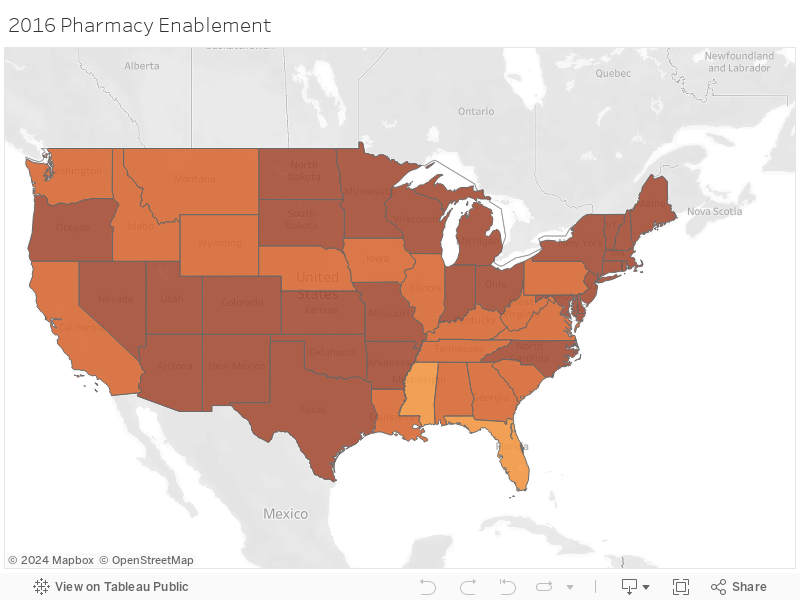
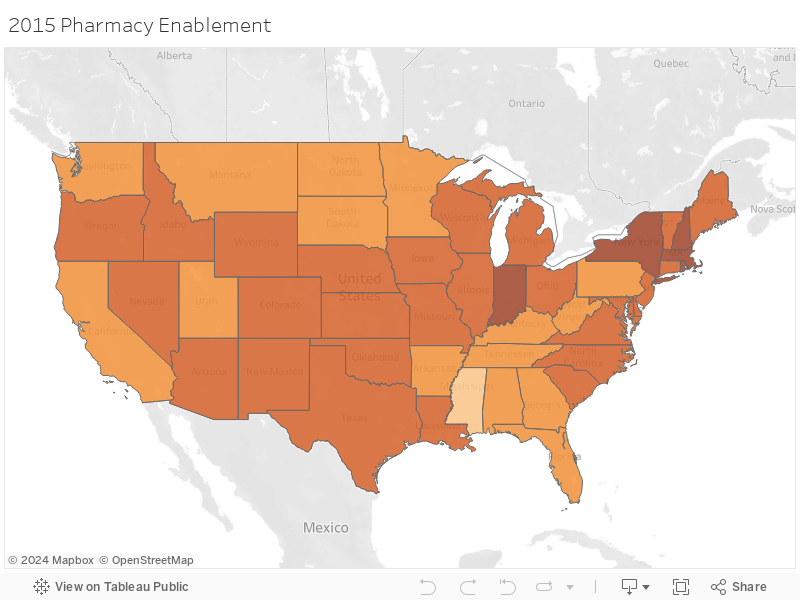
According to the 2015Â Surescripts National Progress Report, an average of 81% of pharmacies were enabled for EPCS in 2015. States including Hawaii and Mississippi were at the bottom of this list with less than 70% of pharmacies enabled, while states in the Northeast such as Massachusetts, New York, New Hampshire, and Rhode Island led this list with over 90% of pharmacies enabled for EPCS.
As of December 1, 2016, these numbers have only risen, with both Hawaii and Mississippi now having over 75% of pharmacies enabled. New York and Maine lead the race on that front with 96.8% and 95.2% of pharmacies enabled currently. This is in large part due to the state mandates put into place in 2016 and 2017, respectfully.
How about the prescribers?
With so many pharmacies enabled for EPCS, and legislature allowing this process in all 50 states, it may be surprising to know that an average of 3.39% of prescribers were enabled to e-Prescribe controlled substances according to the 2015 Surescripts National Progress Report.
Lengthy and time-consuming software auditing and prescriber identity proofing processes are likely factors that have stalled prescriber adoption of EPCS, but for pharmacists, the initial setup is much easier. In addition, there have not been enough incentive for prescribers to adopt EPCS.
e-Prescribing was a requirement under the federal Meaningful Use Electronic Health Record (EHR) program, which incentivizes the use of EHRs through financial payments. However, e-Prescribing of controlled substances was specifically exempted from Meaningful Use Stages 1, 2, and 3. For these reasons, it isn’t surprising that in 2015 the state with the highest number of prescribers enabled was New York, as that was one of the only states with an e-Prescribing state mandate in effect at that time.
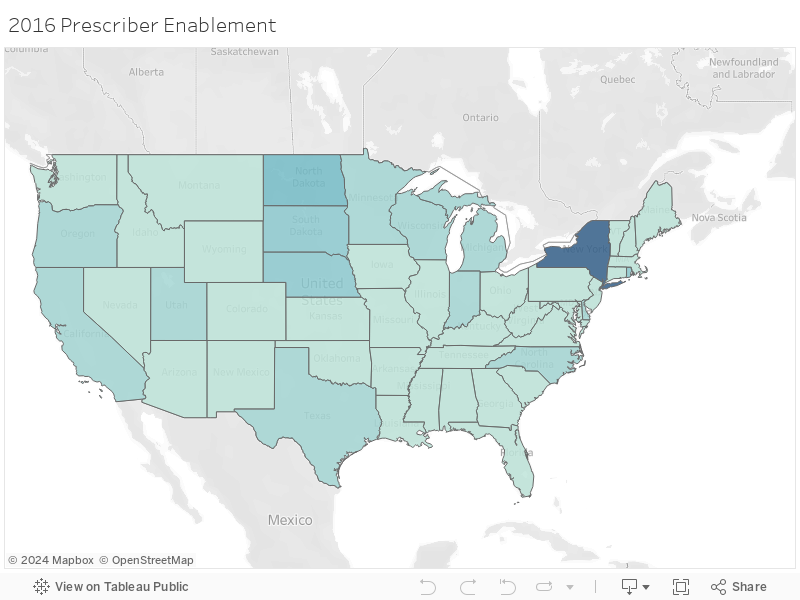
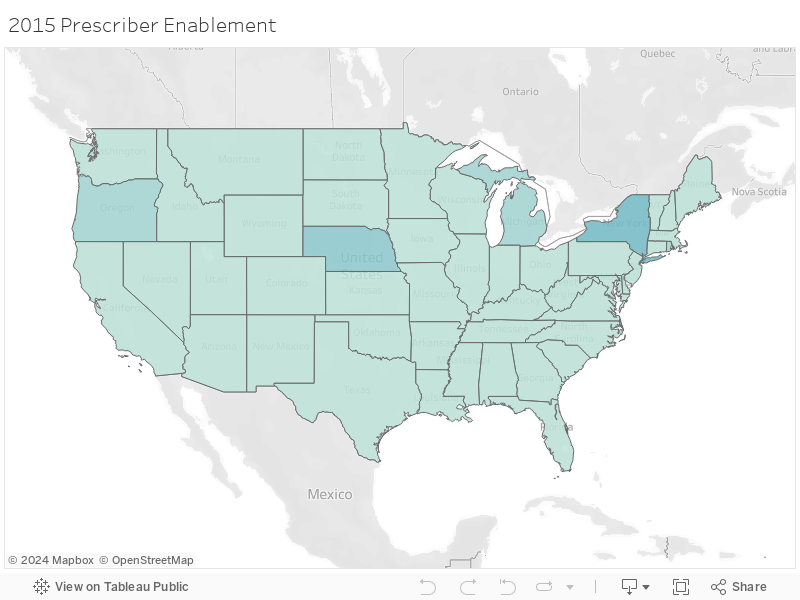
In 2015, New York had 26.6% of their prescribers enabled for EPCS, with Nebraska not far behind at 15%. Fast forward to December 1, 2016 and prescriber enablement has grown tremendously in some states, but remain dismally low in others. New York now has 71.5% of prescribers enabled, with no other state having even one-third of their prescribers enabled for EPCS. In fact, the average percentage for EPCS enabled prescribers remains even as of December 1, 2016, at only 8.4% despite all of the benefits of EPCS.
Why are these numbers so varied?
Electronic prescribing of controlled substances (EPCS) reduces fraud and keeps patients from getting multiple prescriptions for the same drug, so why are some states seeing major buy-in while other states are lagging? Much of this is impacted by states that have legislation in place to either require or reinforce the use of e-Prescribing, as outlined below.
Minnesota
Minnesota was the first state to implement an e-Prescribing mandate in 2008 in order to improve quality outcomes and efficiency in health care. The state mandate required prescribers, pharmacists, pharmacies, and pharmacy benefit managers (PBMs) to be up and running with e-Prescribing by January 1, 2011, however, only 13% of prescribers are actually enabled for EPCS as of late. Could this be because legislation doesn’t enforce its own law or penalize prescribers for not adhering to this legislature? Marty LaVenture, director of the Minnesota Office of Health IT and e-Health, seems to agree and notes, “policy levers could be used to encourage full adoption and use of e-Prescribing capabilities.”
New York
As you may already know, New York was the first state to require e-Prescribing of all prescriptions, both controlled and non-controlled, and the first to implement penalties for failing to adhere to this ruling. Penalties include, but are not limited to, loss of license, civil penalties, and/or criminal charges. With the highest rate of prescriber EPCS enablement, it’s evident that New York prescribers are taking this quite seriously.
Maine
Maine is the next state to implement an e-Prescribing regulation as of July 1, 2017 where all opioids prescriptions must be sent electronically. With only 0.6% of prescribers enabled for EPCS in the state according to the Surescripts report, and up to 2.9% as of the beginning of December 2016, it’s clear that Maine has a long way to go for all prescribers to be ready to follow this regulation.
In Summary
Although it’s legal in all 50 states, and there are many reasons EPCS is safer than on paper or another method, there is still a great discrepancy between EPCS enabled pharmacies and EPCS enabled prescribers due in part to the strict requirements put in place on the prescribers. While the statistics referenced here show that provider adoption of EPCS is still low in comparison to the pharmacy adoption we have seen, it’s important to remember that the e-Prescribing of non-controlled substances also took years to reach the level we now see today. It seems the only tried and true way for these numbers to rise quickly and meet the numbers we currently see for pharmacy enablement is to implement regulations and penalties for not adhering to this requirement as outlined in the above state mandates. All eyes are now on Maine to see how their journey goes.
Check out the maps below to see how your state measures up!
Author: Lindsey W.
Sources: American Pharmacists Association; USA Today; Surescripts 2015 National Progress Report; Surescripts EPCS; Minnesota Department of Health; Maine Medical Association; e-Prescribing Blog; CMS
About DoseSpot
DoseSpot is a Surescripts certified e-Prescribing platform specifically designed to integrate with electronic health record, electronic dental record, practice management, and telehealth software. DoseSpot is certified to e-Prescribe controlled substances and has provided simple, affordable and integratable e-Prescribing to more than 150 health care software companies since 2009. For more information, please visit www.DoseSpot.com.
Posted: November 28th, 2016 | Author: DoseSpot | Filed under: Controlled Substances, In the News, Public Policy | Tags: Controlled Substances, DEA, Dental e-Prescribing, e-Prescribing controlled substances, e-Prescribing Integration, e-Prescribing Maine Mandate, EPCS, Healthcare Software, Maine Controlled Substance Act, Maine Controlled Substance Prescription Requirements, Maine Dose of Reality, Maine e-Prescribing Law, Maine e-Prescribing Legislation, Maine e-Prescribing Mandate, Maine e-Prescribing of Controlled Substances, Maine EPCS, Maine Opioid Law, Maine State Mandate, Mandatory e-Prescribing, Mandatory Electronic Prescribing, Opioid Epidemic, Opioids, Prescription Monitoring Program, State Mandates | No Comments »
Maine is well known for its rocky coastline, iconic lighthouses, sandy beaches, and lobster shacks. However, past the classic scenery is where you’ll find the state dealing with a crisis that others across the United States are also experiencing: the opioid epidemic.
In 2015, Maine suffered an astounding 272 drug overdose deaths, following 208 deaths of the same cause in 2014. Sadly, there is no end in sight. Maine’s Attorney General Janet Mills declared that drug overdose deaths are up 50% in 2016, with the first 6 months of the year experiencing 189 drug overdose deaths alone. What’s worse, the number of overdose-related deaths in 2016 is expected to reach a new record, surpassing those numbers of 2014 and 2015.

“Heroin addiction is devastating our communities,†Maine Governor Paul LePage said in a statement. “For many, it all started with the overprescribing of opioid pain medication.â€
As a state with the largest number of patients per capita on prescription for long-acting opioids, the news that prescribed pain medication is further fueling opioid addiction is unsettling.
This is why Maine has decided to take action.
Maine’s new statue, “An Act to Prevent Opiate Abuse by Strengthening the Controlled Substances Prescription Monitoring Program,†entails a number of rules and regulations designed to reduce the harm of over-prescribing opioids relative to the abuse and misuse of such substances. This bill, signed into law by Governor LePage, mandates a number of changes for doctors and dentists who prescribe controlled substances in Maine.
[Read: The Maine Mandate – Confronting Controlled Substances Head-On]
What changes will be implemented?
Dosing and Duration of Schedule II Medications
First, this law imposes limitations on the medication dosage, as well as the duration of a prescription, that can be prescribed to a patient. According to Gordon Smith, JD, Executive Vice President of Maine Medical Association (MMA), the original bill limited opioid prescriptions to three days for acute pain and fifteen days for chronic pain. However, this legislation will now mandate a limit of seven days for acute pain and thirty days for chronic pain on opioid prescriptions. This law goes in to effect January 1, 2017.
In terms of dosing, prescribers may not prescribe any combination of opioid medication in an aggregate amount of more than 100 Morphine Milligram Equivalents (MMEs) per day to new opioid patients (after July 29, 2016). Existing opioid patients with active prescriptions in excess of 100 MMEs per day are referred to as “Legacy Patients†and prescribers may not prescribe any combination of opioid medication in an aggregate amount of more than 300 MMEs per day from July 29, 2016 to July 1, 2017.
Prescription Monitoring Program
Maine prescribers are required to query the Prescription Monitoring Program (PMP) database prior to prescribing opiates. Although this requirement has been in place since 2005, surveys indicate that only 7-20% of Maine prescribers currently utilize the state’s PMP.
The purpose of checking this central state database is to identify patients who may be doctor shopping and minimize multiple controlled substance prescriptions for one patient. This aligns with the state’s hope of empowering healthcare providers to recognize potential substance abuse and treat patients accordingly.
PMP’s can also be most effective when linked with an e-Prescribing solution. Working together, e-Prescribing eliminates the need for paper prescriptions, thus reducing the risk of altered dispense quantities, stolen prescriptions or prescription pads, and the reselling of such prescriptions before they’re filled as a means of lessening the red flags if a patient is doctor shopping.
[Read: The Link Between PDMP’s and e-Prescribing]
Continuing Education
Via this statute, prescribers must complete three hours of continuing education every two years as a condition of prescribing opioid medications. This specific addiction training is only required if a prescriber wishes to continue prescribing opioids.
Electronic Prescribing
All opioid prescriptions must be sent electronically as of July 1, 2017.
What exceptions are part of this mandate?
The Maine Medical Association (MMA) confirms that exceptions from the law’s provisions may be granted for the following:
- Cancer Patients
- Hospice Care
- End-of-Life Care
- Palliative Care
- Patients on Medication-Assisted Therapy (MAT)
- Patients receiving medication in hospitals and nursing homes
The MMA is currently seeking an exception for burn victims as well.
Due to the supremacy clause of the U.S. Constitution, federal law takes priority over state law, therefore prescribers within the Department of Veterans Affairs (the VA) cannot be regulated by this type of legislation so long as the medication is dispensed at a VA pharmacy. Furthermore, dosage and duration limits would not apply to a prescription written for a veteran by a prescriber outside of the VA system if the prescription were filled in a VA pharmacy.
How does this bill measure up?
With this bill, Maine becomes the third state behind Minnesota and New York to require e-Prescribing and the second to require the electronic sending of a controlled substance after New York imposed a similar mandate in March of 2016. Since the implementation of New York’s mandate, total numbers of opioid analgesics prescribed fell by 78% within the first four months.
Important dates to remember:
|
7/29/2016
|
Prescribers may not prescribe any combination of opioid medication in an aggregate amount of more than 100 Morphine Milligram Equivalents (MMEs) per day to new opioid patients |
|
7/29/2016 – 7/1/2017
|
Prescribers may not prescribe any combination of opioid medication in an aggregate amount of more than 300 MMEs per day to “Legacy Patients†|
|
1/1/2017
|
Duration limitation goes into effect. All opioid prescriptions cannot exceed seven days for acute pain or thirty days for chronic pain. |
| 7/1/2017 |
All opioid prescriptions must be sent electronically |
Lastly, as part of the state’s strategy, Maine has launched Dose of Reality, a website to help educate and inform their citizens of the dangers of painkillers and where to turn for help.
Author: Lindsey W.
Sources:Â Maine Medical Association; Maine.gov; Medscape; WCSH6; Bangor Daily News
About DoseSpot
DoseSpot is a Surescripts certified e-Prescribing platform specifically designed to integrate with electronic health record, electronic dental record, practice management and telehealth software. DoseSpot is certified to e-Prescribe controlled substances and has provided simple, affordable and integratable e-Prescribing solutions to healthcare IT companies since 2009. For more information, please visit www.DoseSpot.com.

 Follow